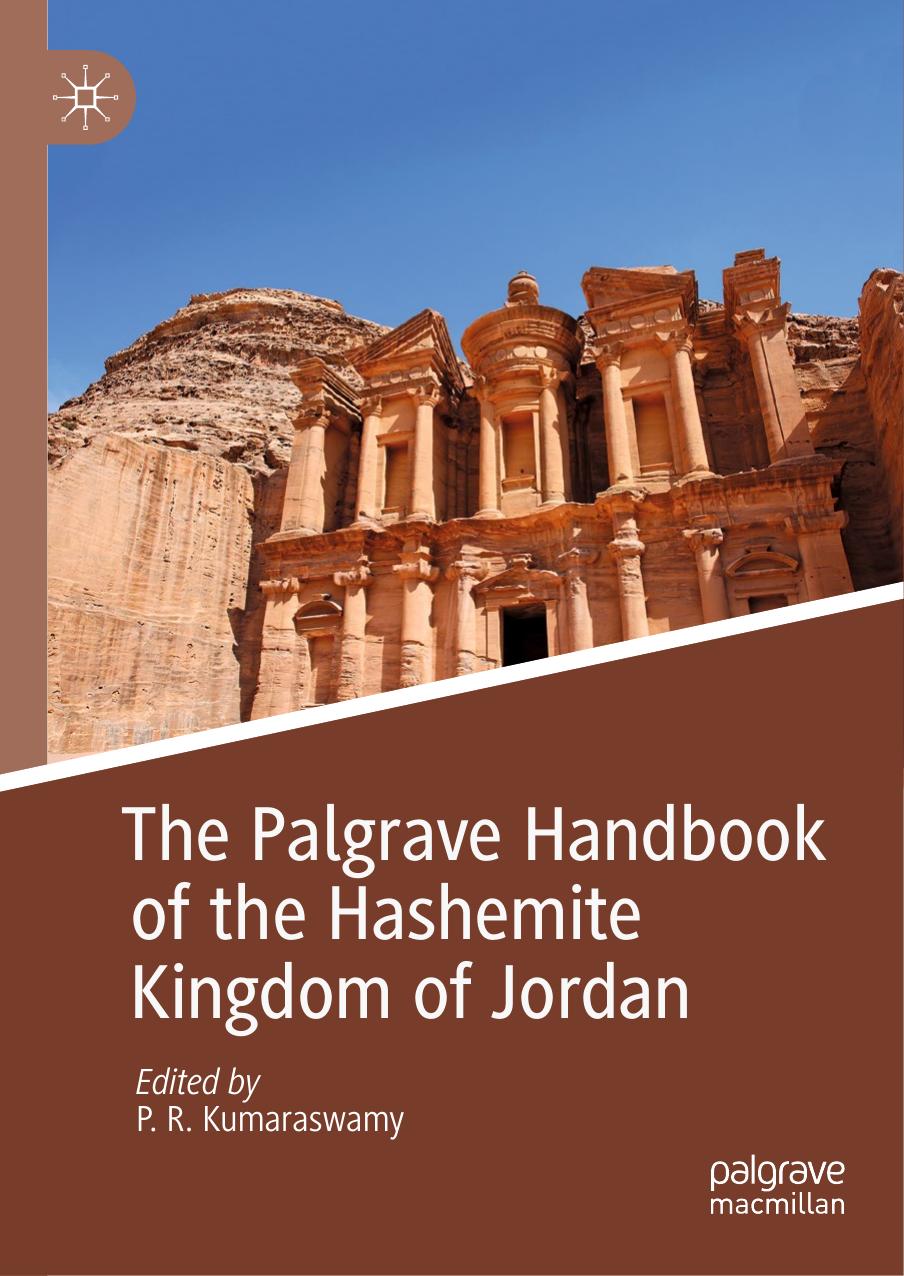
The Palgrave Handbook of the Hashemite Kingdom of Jordan by P. R. Kumaraswamy
Author:P. R. Kumaraswamy
Language: eng
Format: epub, pdf
ISBN: 9789811391668
Publisher: Springer Singapore
Salafism in Jordan: Between Cooperation, Opposition, and Confrontation
The Muslim Brotherhood in Jordan, but also in other countries, is characterised by a broad and general ideology, and its members do not usually delve into great detail about Islamic law or spirituality, let alone theology. Salafism is, in that sense, the complete opposite of the Muslim Brotherhood because it pays precise attention to such aspects of Islam. Salafis can be defined as those Sunni Muslims who claim to emulate al-salaf al-salih (“the pious predecessors,” usually associated with the first three generations of Muslims) as closely and in as many spheres of life as possible. Because of their desire to follow the Prophet, his companions, and their early descendants, Salafis pay considerable attention to what these first generations of believers did, said, allowed and forbade through the study of hadiths. As a result, references to these traditions relating sayings of the Prophet or his early followers often pervade the discourse of Salafis, keen as they are to adhere closely to Muhammad’s lifestyle in all areas of life, including dress, language, and gender relations.
What sets Salafis apart from other Muslims is not just their lifestyle, but—more importantly—their ideology. Concerning theology, they adhere strictly to what they see as the pure ideas on the unity of God (tawhid) and the different components of faith (iman) they believe were adhered to by the earliest Muslims, rejecting any rational or metaphorical readings of the Qur’an. Instead, they read the sources literally and as they were supposedly revealed. Legally, Salafis differ from other Sunnis, and they state, for instance, that since the four schools of Islamic law (madhahib, sing. madhhab) that mainstream Sunnis often follow did not exist when the Prophet and his immediate followers were alive, Salafis should not practice blind emulation (taqlid) of these schools either. They should instead interpret the Qur’an and the Sunna independently (ijtihad) and according to the understanding of the salaf, thus underlining their desire to emulate the latter in the legal sphere, too. As this requires a lot of knowledge of Islamic law, many non-scholarly Salafis follow a school of Islamic law—often the Hanbali one—in practice.6
Download
The Palgrave Handbook of the Hashemite Kingdom of Jordan by P. R. Kumaraswamy.pdf
This site does not store any files on its server. We only index and link to content provided by other sites. Please contact the content providers to delete copyright contents if any and email us, we'll remove relevant links or contents immediately.
International Integration of the Brazilian Economy by Elias C. Grivoyannis(111448)
The Radium Girls by Kate Moore(12110)
Turbulence by E. J. Noyes(8141)
Nudge - Improving Decisions about Health, Wealth, and Happiness by Thaler Sunstein(7770)
The Black Swan by Nassim Nicholas Taleb(7217)
Rich Dad Poor Dad by Robert T. Kiyosaki(6770)
Pioneering Portfolio Management by David F. Swensen(6353)
Man-made Catastrophes and Risk Information Concealment by Dmitry Chernov & Didier Sornette(6155)
Zero to One by Peter Thiel(5889)
Secrecy World by Jake Bernstein(4819)
Millionaire: The Philanderer, Gambler, and Duelist Who Invented Modern Finance by Janet Gleeson(4548)
The Age of Surveillance Capitalism by Shoshana Zuboff(4372)
Skin in the Game by Nassim Nicholas Taleb(4319)
The Money Culture by Michael Lewis(4272)
Bullshit Jobs by David Graeber(4264)
Skin in the Game: Hidden Asymmetries in Daily Life by Nassim Nicholas Taleb(4069)
The Dhandho Investor by Mohnish Pabrai(3838)
The Wisdom of Finance by Mihir Desai(3805)
Blockchain Basics by Daniel Drescher(3650)
